A living settlement
Rescue survivors, assign jobs, build the port, provide food and prepare its defences.
 CZ
BEHIND THE SCENES AT MISHANEK GAMES
Making The Last Port — from the first idea to a playable settlement.
THE GAME’S EVOLUTION
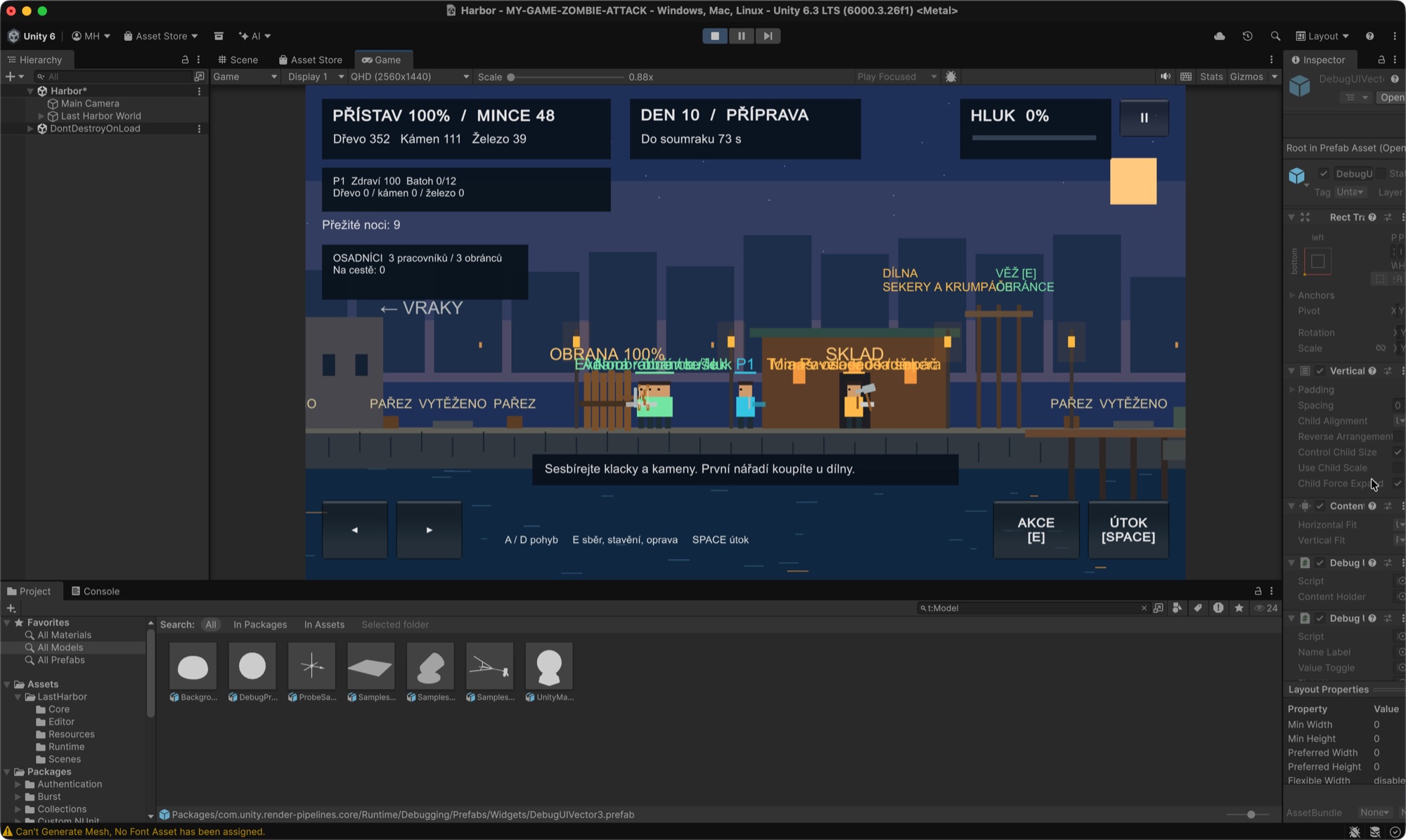
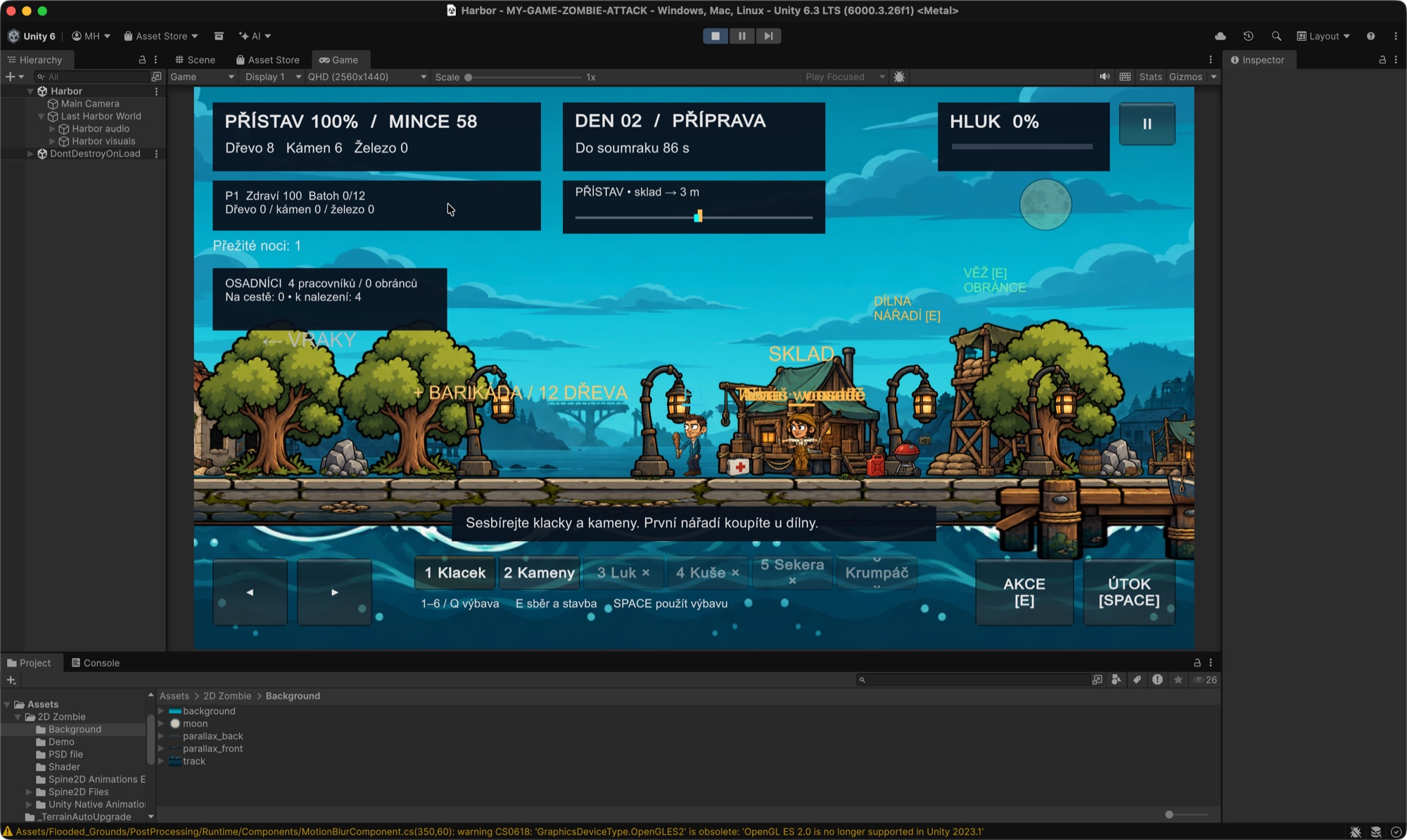
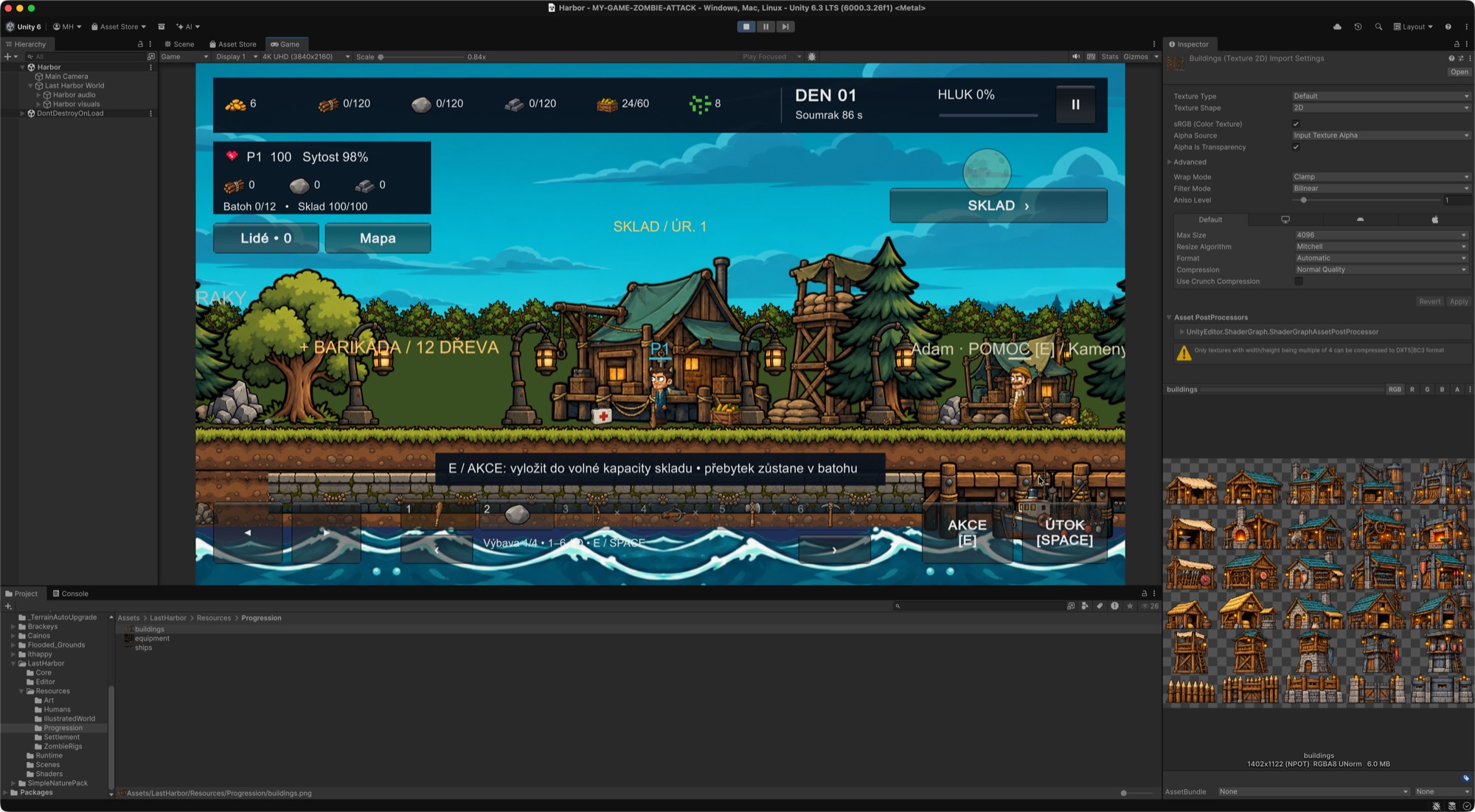
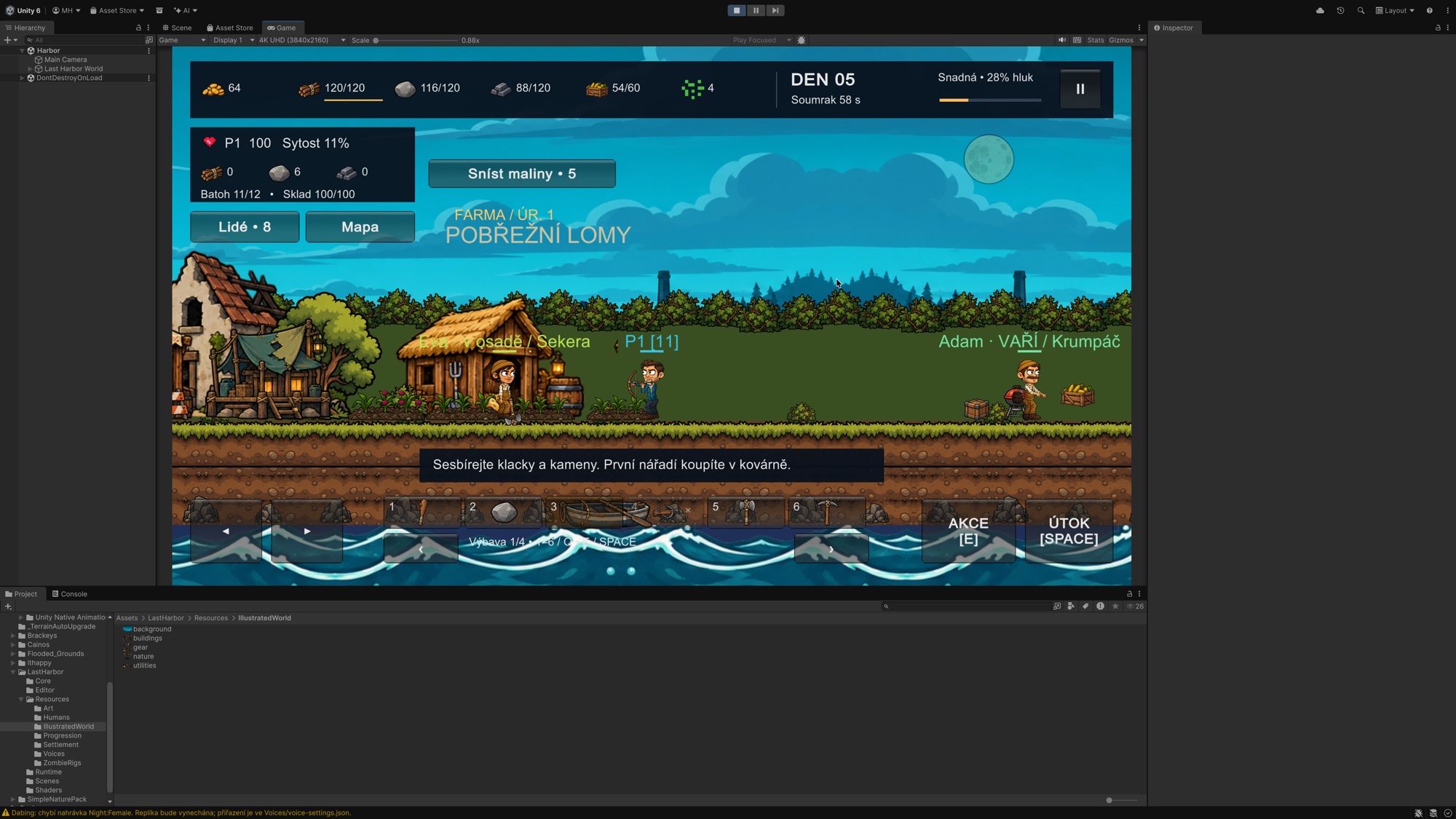
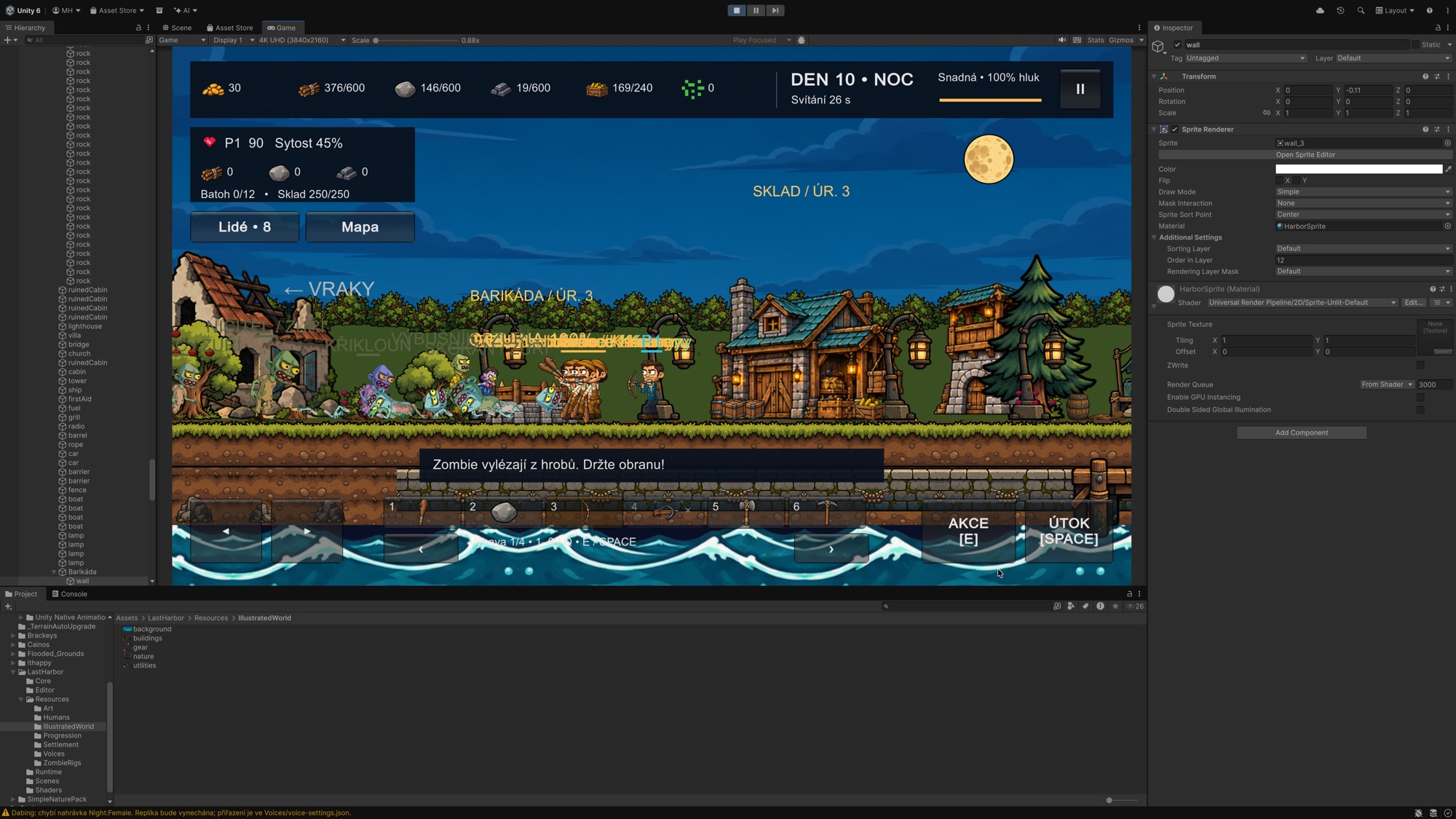
This is where the game began. These archive screenshots from Unity show how simple shapes evolved into characters, scenery and a more refined interface.
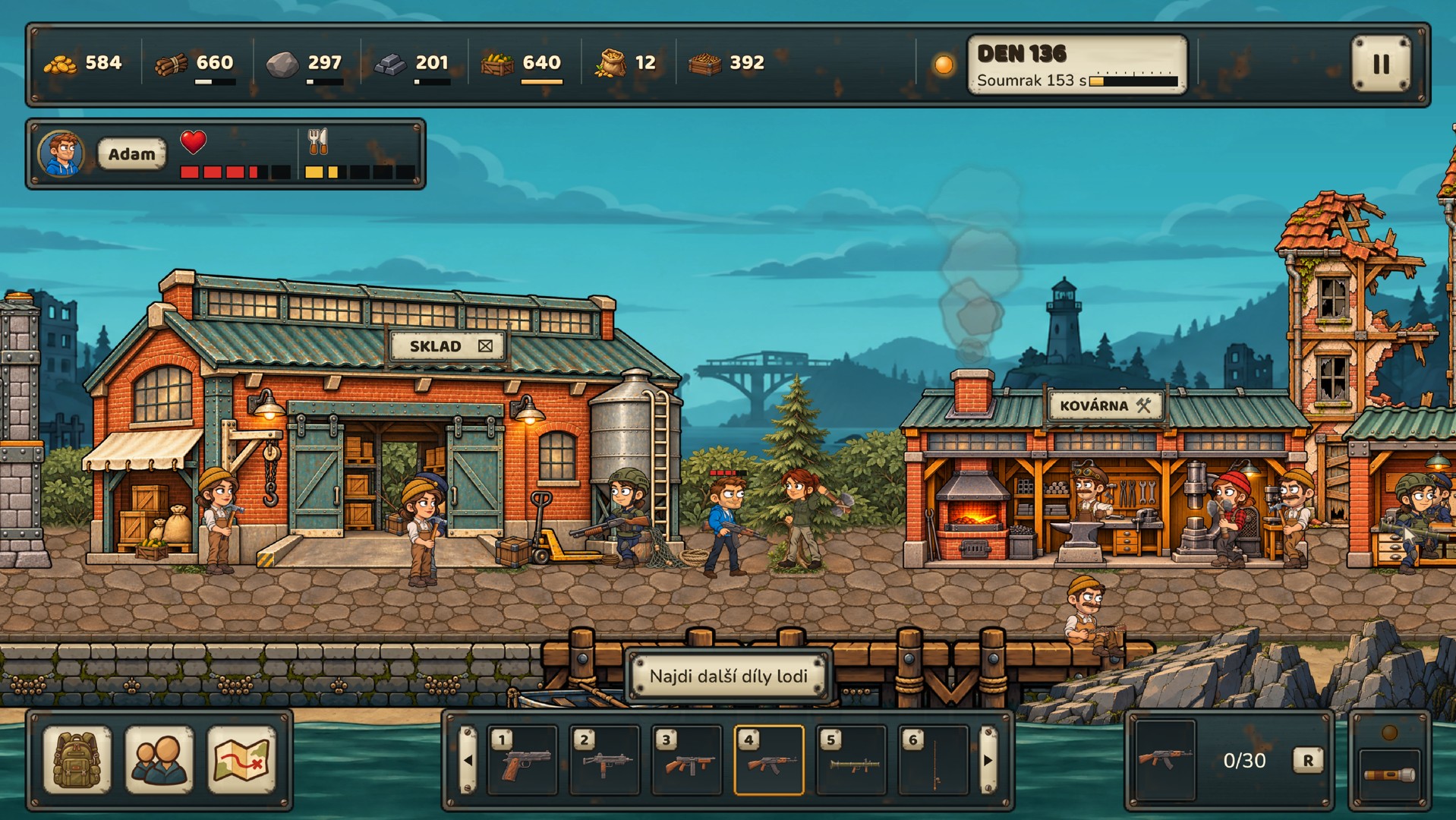
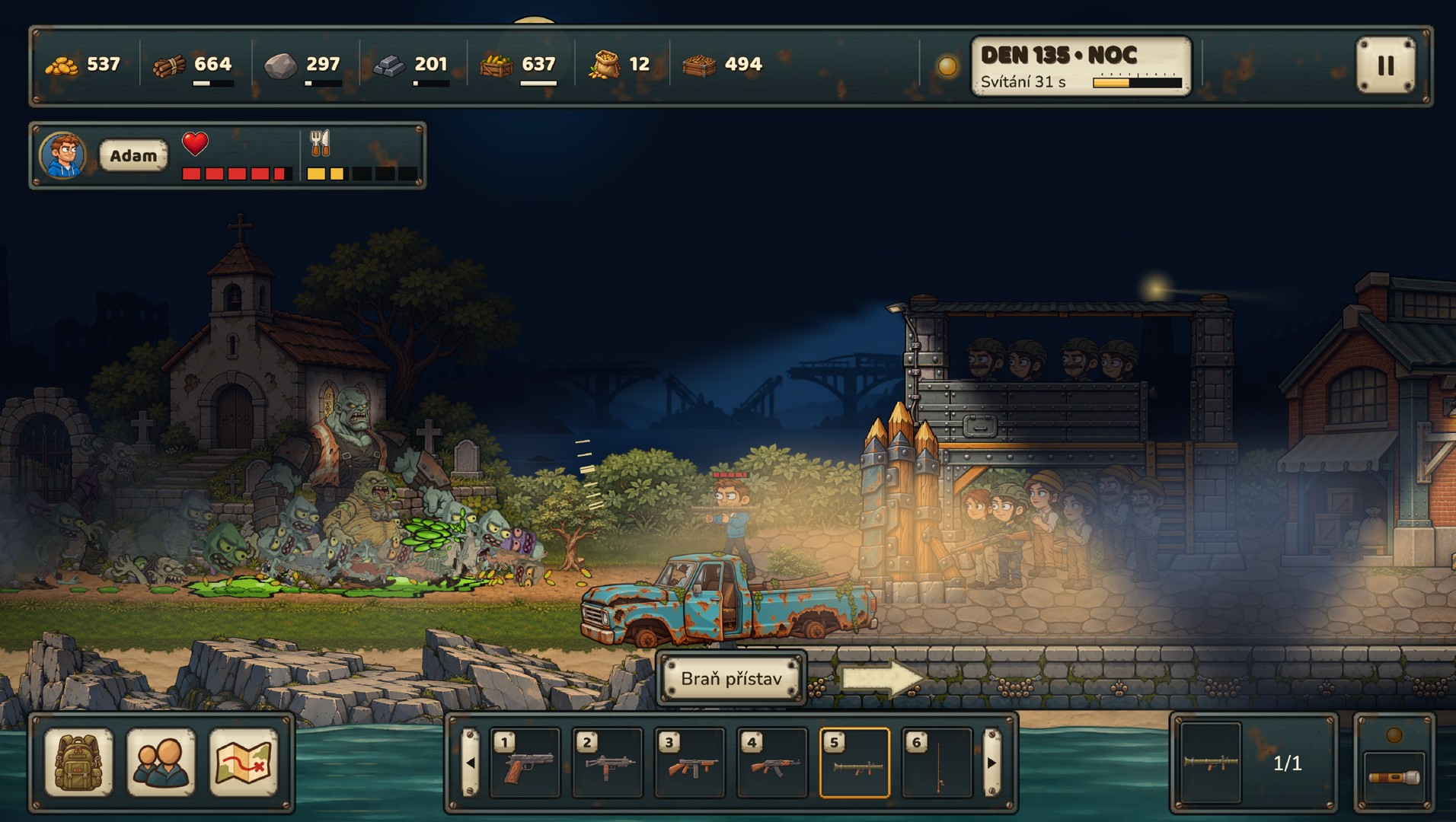
Today the port is a detailed settlement with workshops, a farm and survivors. These current gameplay shots show everyday life and defence against the night-time horde. Development is ongoing.
MICHAL HAVEL / DEVELOPMENT
I am the sole developer of the game, with substantial assistance from AI, primarily Claude and Codex.
I work in software development, but creating my own video game is an entirely different challenge. AI helps me bring ideas to life, program game systems and work on graphics and animation. I am responsible for the game concept, mechanics, how they connect and the final tuning.
The Last Port is already a playable 2D survival game. It brings settlement management, defence, exploration and tactical battles together in a world I continue to develop.
Rescue survivors, assign jobs, build the port, provide food and prepare its defences.
Gather supplies and build by day; face zombies by night. A fallen settlement is not the end: you can rebuild it and bring survivors back.
Find five parts to repair the boat. Each is guarded by a boss, with battles using a turn-based tactical system. The final encounter awaits in the lighthouse.
Build, explore and defend together online or over a local network.
The game includes Czech text, voiced dialogue and character lines.
AI can speed up development considerably, but it does not do everything on its own. Creating natural character animations, working game systems and making all the mechanics fit into a playable whole takes extensive testing and revision.
Exploring, experimenting and tuning are central to the process. I decide what belongs in the game, how its parts work together and what needs reworking.
THE DEVELOPER’S WORKSHOP
Alongside the game, I develop tools that support my everyday work. They help me try changes faster, keep track of the project and spend more time on the player experience.
I use a visual preview to tune character assembly, poses, movement and the way weapons and tools are held. I can adjust individual body parts and check the result while walking or attacking. The same workspace helps with humans, zombies and the animal companion.
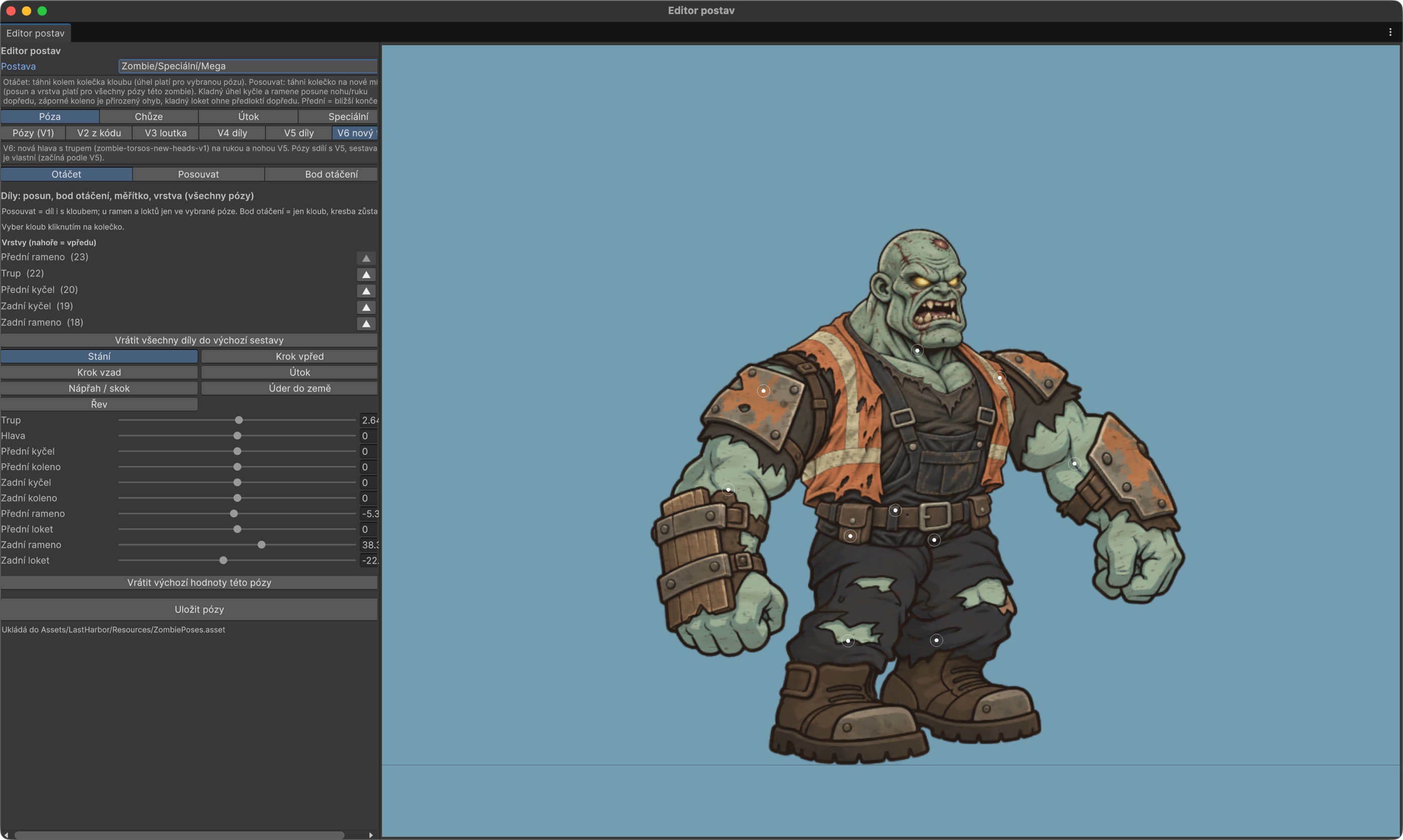
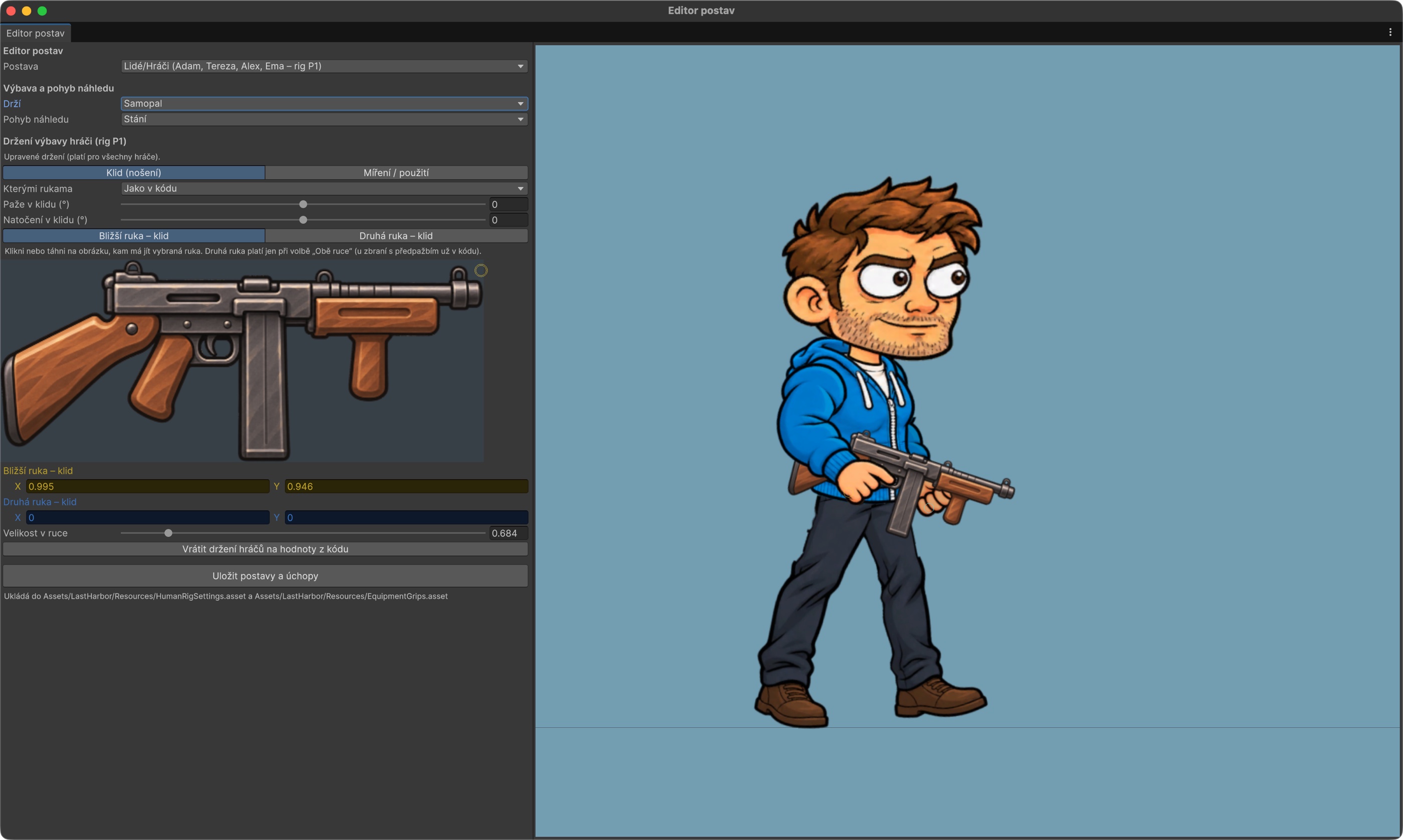
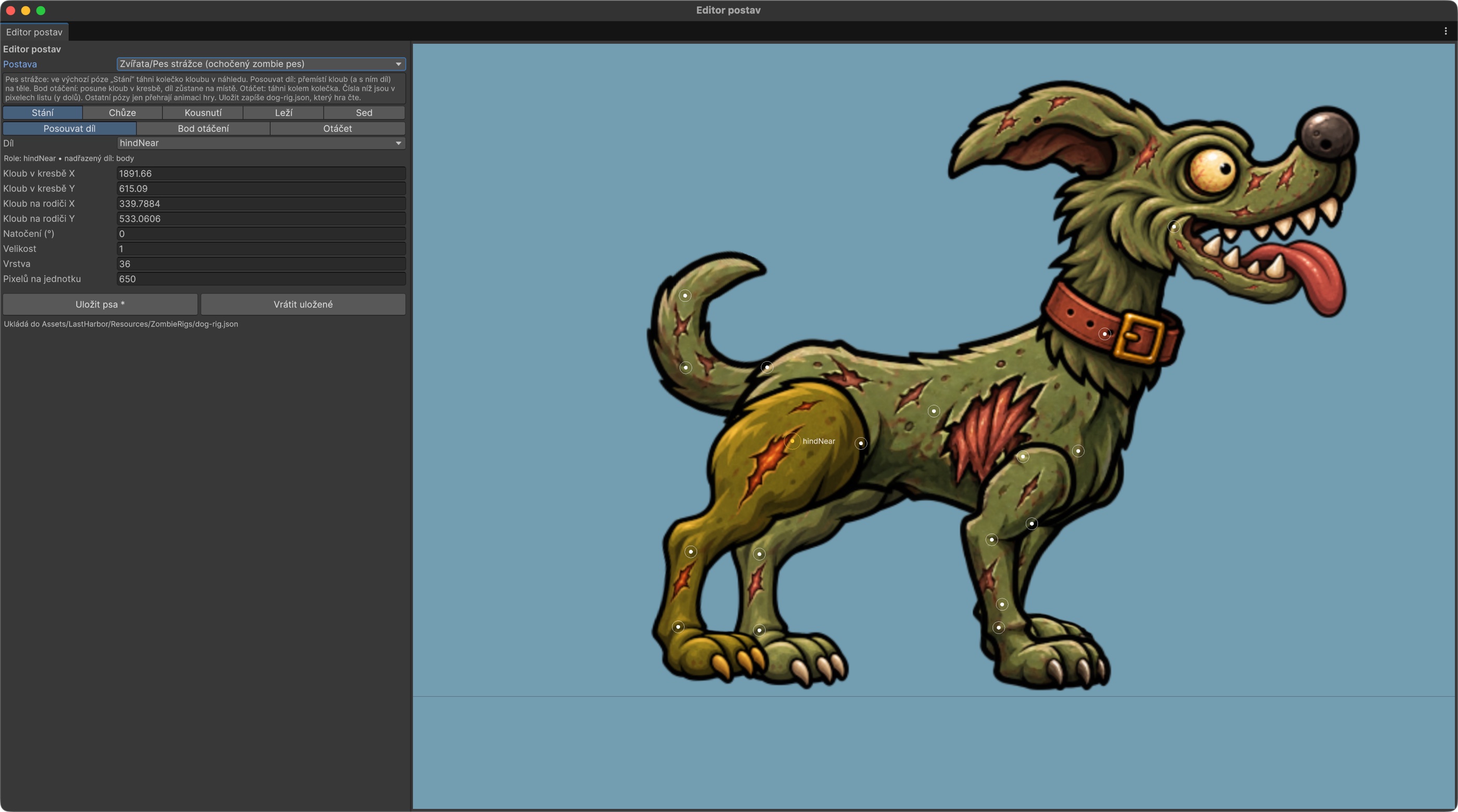
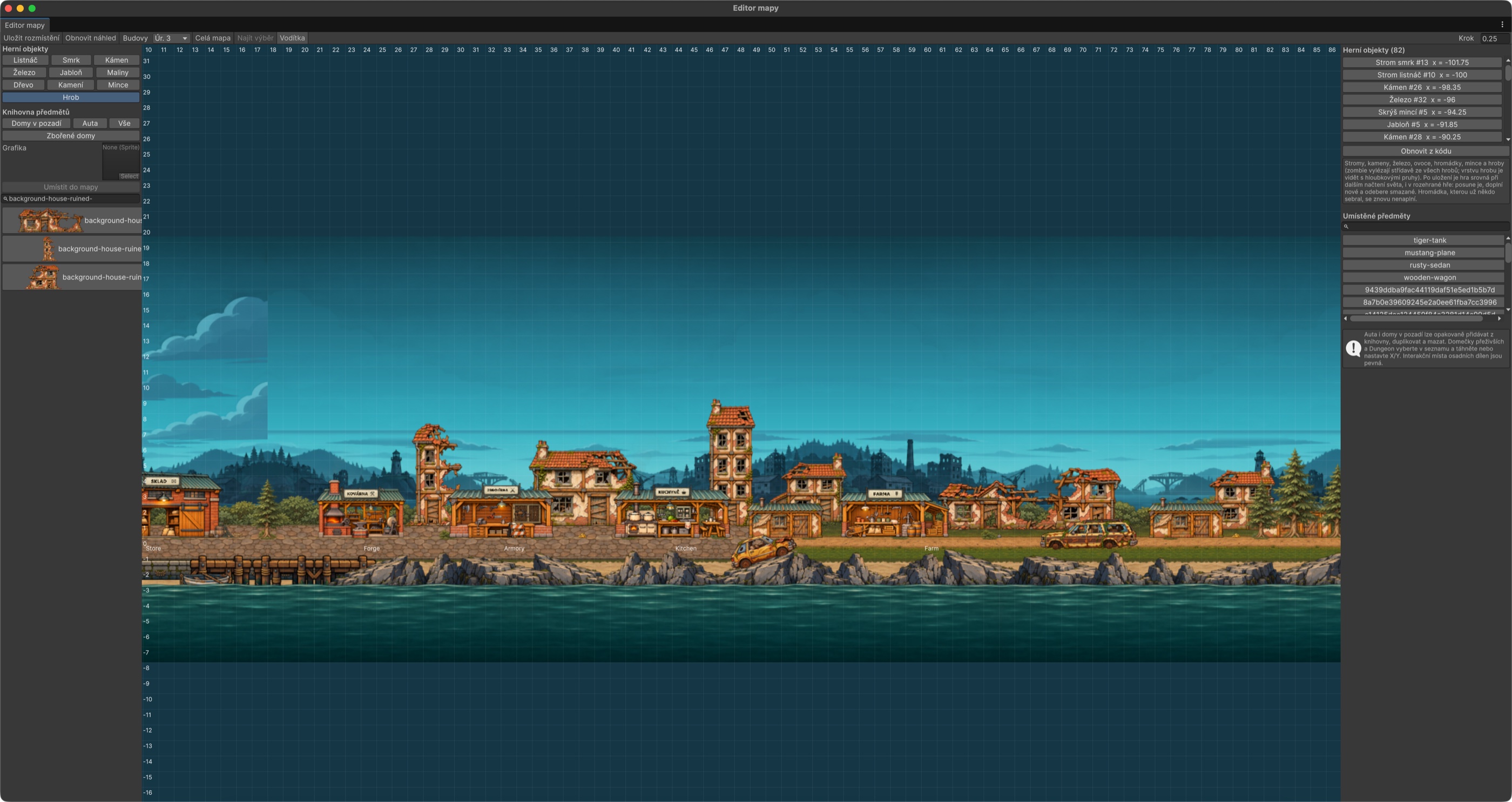
My visual editor lets me place objects, scenery and resources directly over a preview of the game world. I can try different compositions and preview settlement buildings at different upgrade levels without starting a new game for every adjustment.
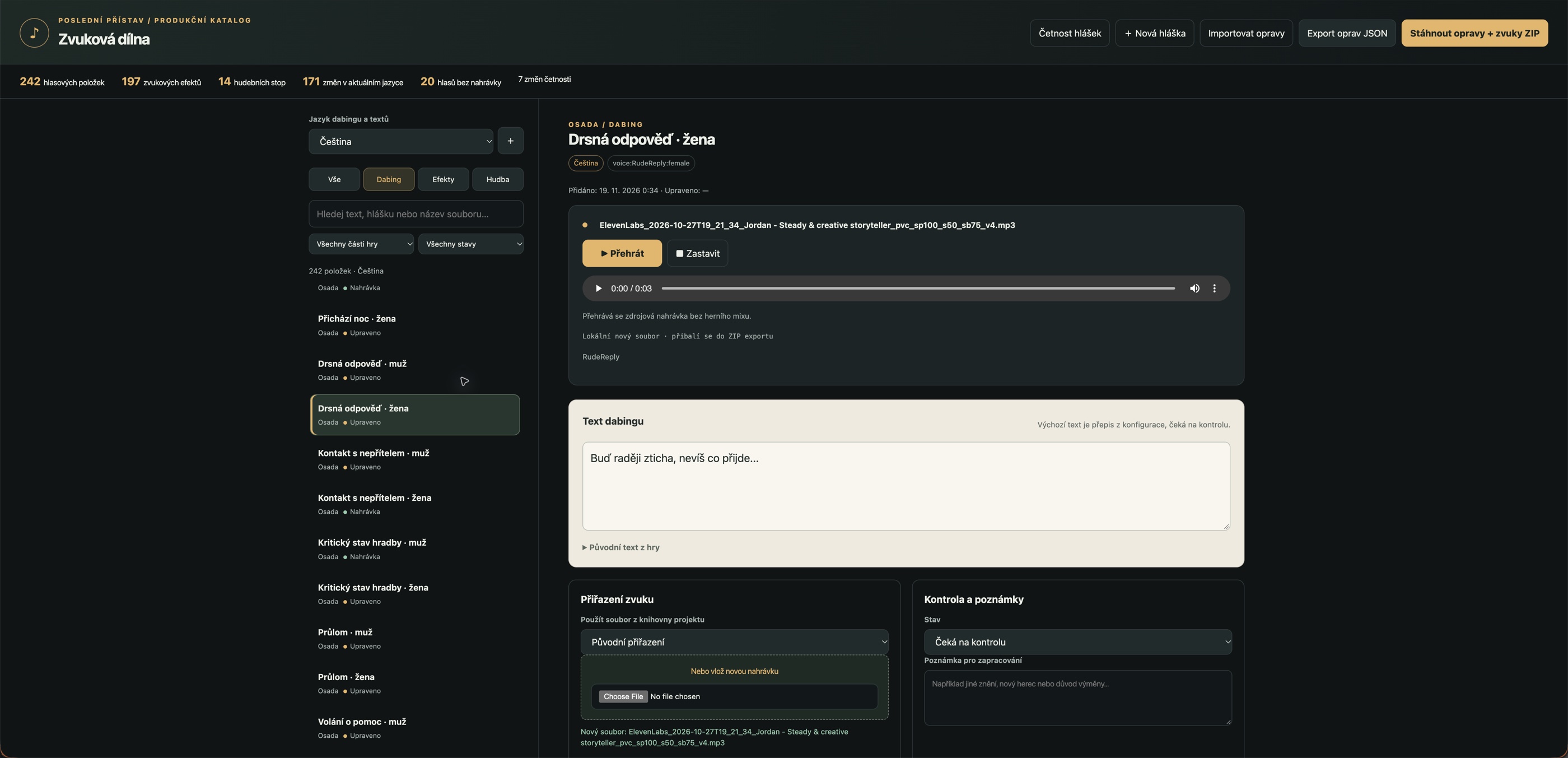
Voice lines, sound effects and music are brought together in one place. I can listen to recordings, edit text, assign replacement audio and flag items for review. The tool also helps prepare additional languages and hand changes back to the game.
My own workspace connects tasks, deadlines and playtest notes. A list, timeline and calendar help me track work in progress and the next steps. Each task distinguishes completed work, practical verification and issues that need another look.
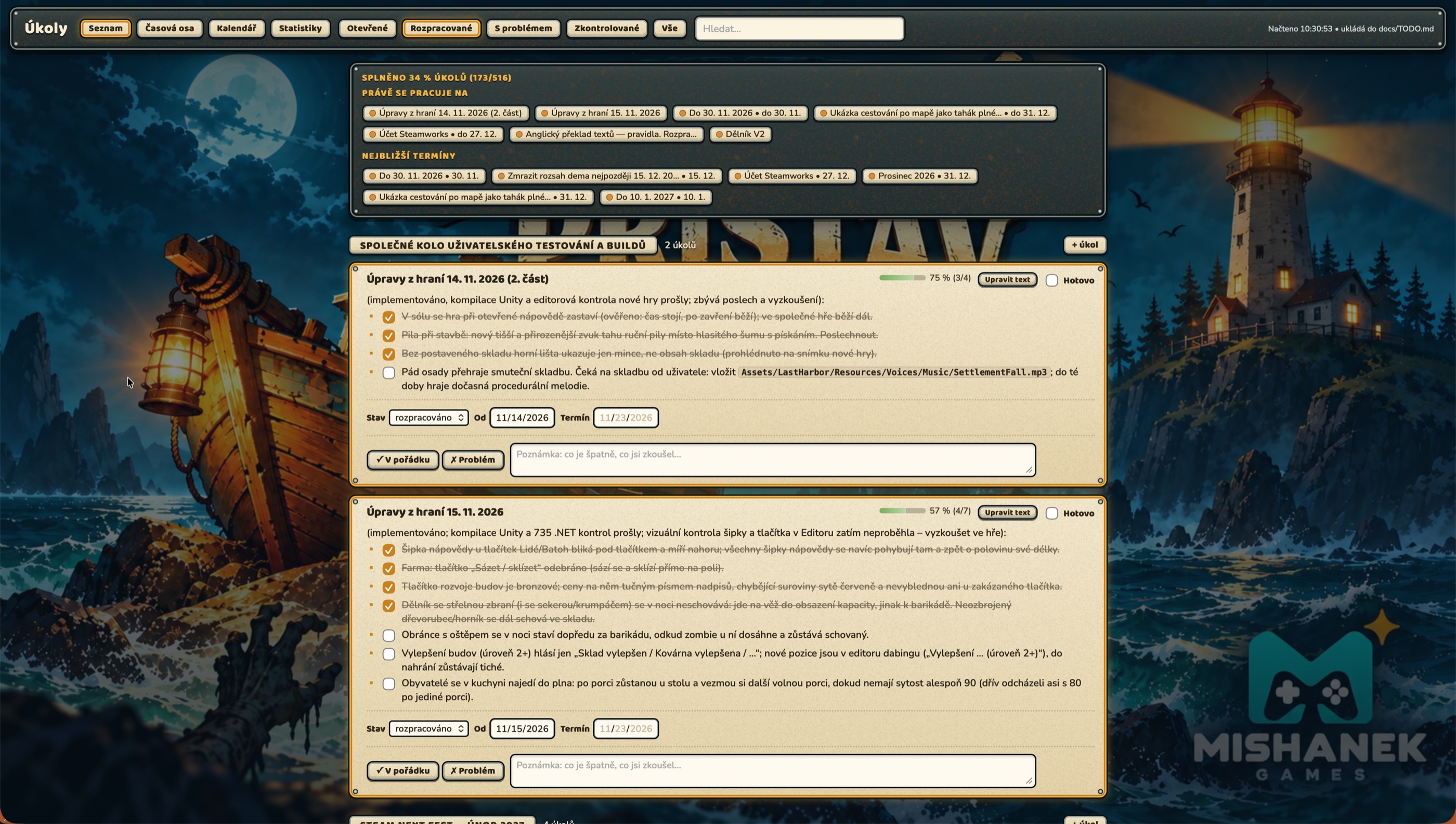
These are internal tools for making The Last Port, evolving alongside the game.
DEVELOPMENT CONTINUES
The changelog covers new features, fixes and earlier development milestones. I will update it with future demo builds, with the newest changes at the top.
Read the demo changelogIf the project or the story behind it interests you, I am happy to offer an interview, a behind-the-scenes look or access to the playable Windows and macOS demo. The demo is currently available to invited testers.
Get in touchMichal Havel · MISHANEK GAMES